
Why Yoga Begins with Sun Salutations
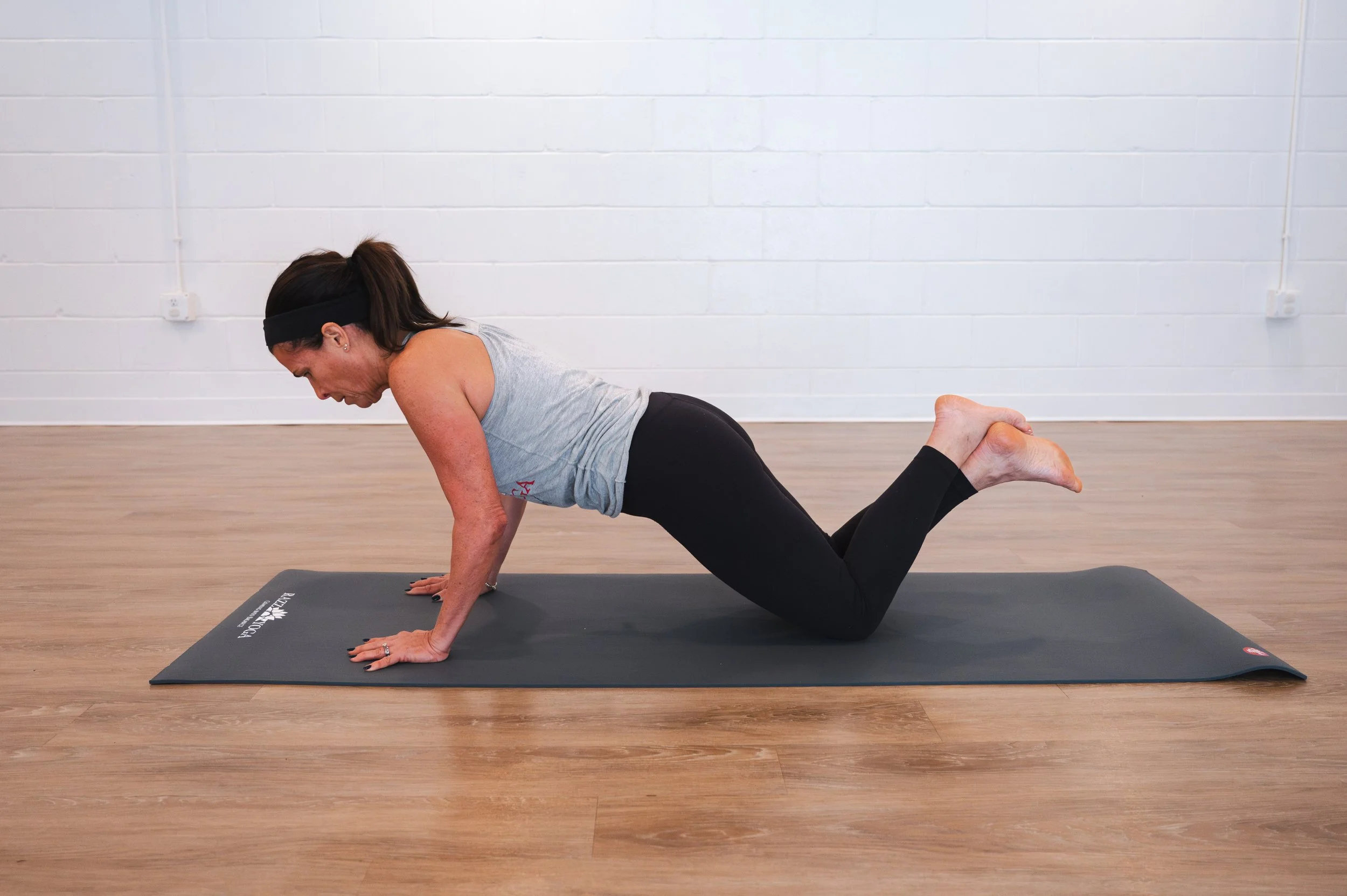
If you’ve taken class with us, you’ve probably noticed something. We almost always begin with Sun Salutations.
And if you’re newer to yoga, you might have wondered:Why do we keep repeating the same sequence? Is this just the warm-up?
The answer is yes…and no.
Sun Salutations (Surya Namaskar) are woven through many styles of yoga, including Ashtanga, Vinyasa, and Hatha. The name itself comes from Sanskrit: surya (sun) and namaskar (to bow or offer greeting). At its heart, the practice is an act of gratitude, honoring the source of light and life. But in modern life, they serve another purpose. They help us transition from the daily stresses into meditation.
From rushing to arriving. From thinking to breathing. From scattered…to something that feels manageable again.
It’s More Than Just a Warm Up
Yes, Sun Salutations warms the muscles. They build strength in your shoulders, core, and legs. They improve flexibility and circulation. However, what they really do is connect your breath to your movement. We want to focus on when we are inhaling and exhaling.
Inhale to lift.
Exhale to fold.
Inhale to lengthen.
Exhale to step back.
Two Classical Forms
There are two primary variations most students encounter: Sun Salutation A and Sun Salutation B.
Sun Salutation A - Often introduced first, this sequence builds the foundation. It weaves together forward folds, plank, upward-facing backbends, and downward dog in a clean, steady rhythm. While it is accessible to beginners, alignment matters. Especially in transitions like Chaturanga, where shoulder stability is key. Thoughtful modifications protect the joints and build sustainable strength.
Sun Salutation B - builds heat more quickly. With the addition of Chair Pose and Warrior I, it introduces deeper leg engagement and more dynamic transitions. The practice expands.
How We Practice It
In our Hatha classes, we move through a classical version of Surya Namaskar that includes:
Prayer Pose → Upward Salute → Standing Forward Fold → Equestrian Pose or Low Lunge → Plank → Eight-Limbed Salute → Cobra → Downward-facing Dog → Equestrian Pose or Low Lunge → Standing Forward → Upward Salute → Prayer Pose
In Vinyasa and Flow, we practice both Sun Salutation A and B, incorporating Mountain pose, Half Lifts, Upward-Facing Dog, and the dynamic step-through to Warrior I on each side.
Different styles. Same intention: breath-led movement.
How You Can Practice It At Home
Here’s something many people don’t realize, Sun Salutations don’t just start your practice, they can be your practice. Three to five rounds can be enough to:
Wake up the body
Clear mental fog
Transition into seated meditation
Reset after a long day of sitting
And sometimes, that’s exactly what we need. I often suggest a few rounds at home on the days you feel stiff, distracted, or short on time.
Get Back to Basics With Razz
If you would like to dive deeper into the world of Sun Salutations, we invite you to join us for our Back to Basics workshop with Sarah on March 7th. You can expect to be led through the foundational poses of Surya Namaskar—breaking down each movement, syncing breath with motion, and helping you find ease and intention in every transition.
All levels are welcome. Just bring your mat, your breath, and your strength. Reserve your spot today.