
Restorative Yoga: A Q&A With Our Instructors
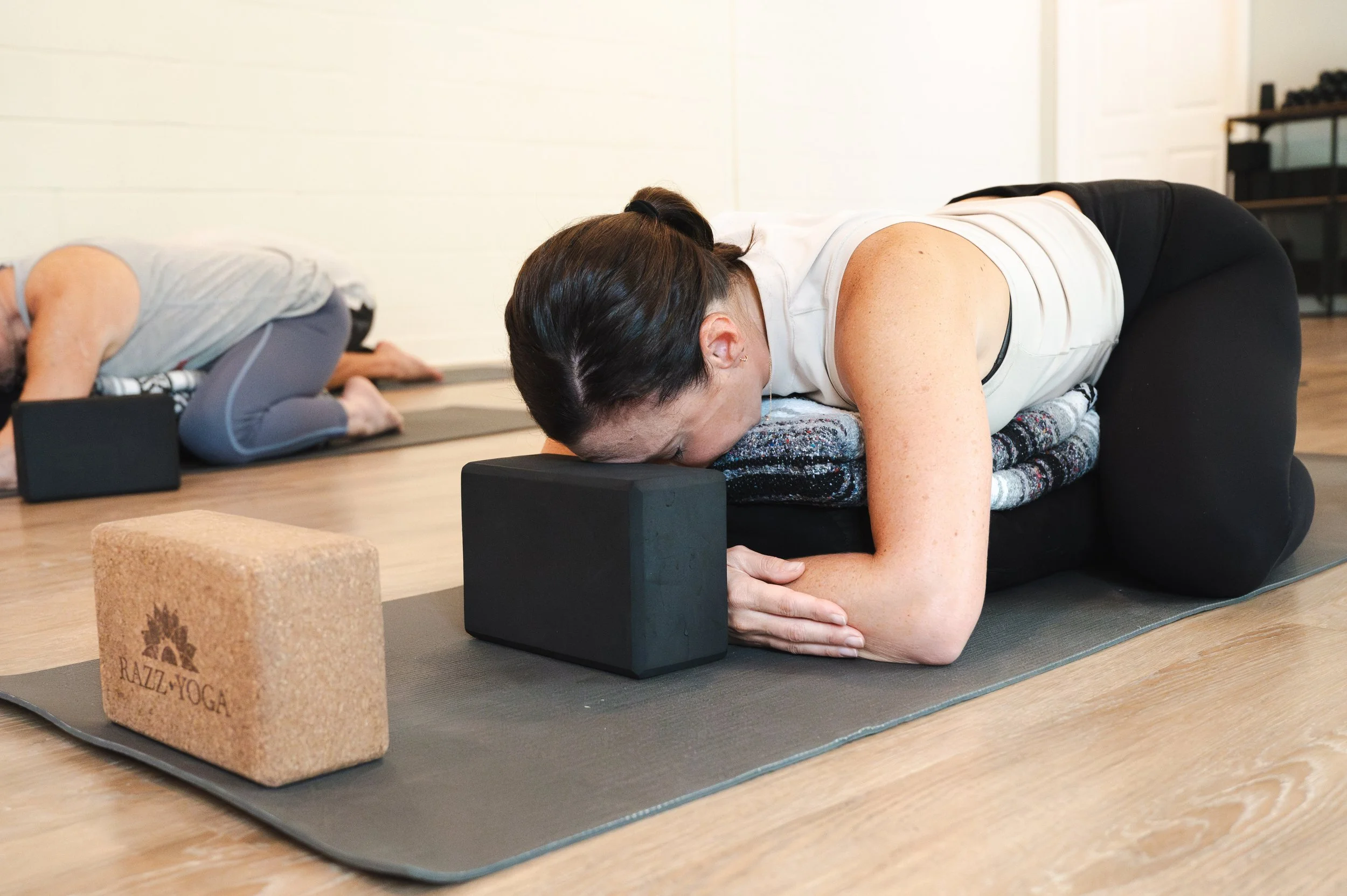
Restorative yoga is often misunderstood as simply “resting on props,” but those who practice and teach know it’s far more than that. We spoke with several instructors to explore what restorative yoga truly is, why it matters, and how it meaningfully supports health and well-being in everyday life.
Q: What is restorative yoga and how is it different from other yoga styles?
Jaclyn: Restorative yoga supports health and wellbeing by encouraging deep relaxation. Unlike other yoga styles, a person rests in a supported pose (ideally with plenty of props) for a sustained amount of time. This helps activate the parasympathetic nervous system and the body’s relaxation response. In this state, breathing and heart rate may slow, blood pressure may decrease, and cortisol levels may drop.
Robin: As Judith Hanson Lasater describes it, restorative yoga uses props to support the body in positions of comfort and ease to facilitate health and relaxation. It’s not about stretching—it’s about opening.
Jenn: It’s a practice of creating a feeling of safety in the body through stillness—something many people don’t naturally have—and bringing balance back into the system.
Nilvis: Restorative yoga is a slow, intentional practice designed to help the nervous system downshift. Unlike more active styles like vinyasa or even yin, restorative yoga fully supports the body so there’s very little muscular effort. The goal isn’t to stretch or strengthen—it’s to rest, regulate, and restore. Poses are held for longer periods, allowing the body to feel safe enough to release tension on a much deeper level.
Q: What are the benefits of restorative yoga? Is it for all ages and activity levels?
Jaclyn: Experts have shared that triggering the relaxation response may help reduce stress and anxiety, lower resting heart rate and blood pressure, improve sleep quality, and relieve physical pain or soreness.
Robin: Restorative yoga soothes the body, quiets the mind, and fosters balance. It promotes connection between body, mind, and breath and activates the parasympathetic nervous system (PNS), also known as the “Rest and Digest” response. It’s sustainable across ages and activity levels and can support recovery from illness or injury.
Nilvis: Benefits show up differently depending on the person:
Athletes or highly active people: supports recovery and balances an “always on” nervous system.
Chronic stress: supports sleep, anxiety, and burnout recovery.
Aging bodies: supports mobility, joint health, and nervous system resilience.
Ultimately, it meets people exactly where they are—whether they’re 25 and exhausted or 65 and managing pain or fatigue.
Q: Why do you value restorative yoga?
Jaclyn: It creates intentional space to step out of our culture of constant doing and checking off boxes on the to-do list. It promotes simply being and turning inward.
Robin: Restorative Yoga has been deeply transformative in my life. It taught me how to slow down, support my nervous system, and find calm during stress. Practice helps me feel safe & supported, to release tension & to naturally quiet my mind. Through both practicing & teaching Restorative Yoga, rest is not indulgent—it’s essential.
Jenn: As someone who has always been very driven and “on the go,” restorative yoga taught me with MUCH practice how to feel safe in stillness.
Nilvis: It creates space for true healing. Restorative Yoga is a practice that reminds us we don’t always need to fix or push—sometimes we need to simply allow. Some of the most profound shifts I’ve witnessed—in myself and my students—have happened in stillness.
Q: What is the best use for restorative yoga in a daily or weekly routine?
Robin: Restorative yoga works best when practiced regularly. Even 15–20 minutes daily can provide benefits. A longer weekly session can help reset the system and create space for stillness.
Nilvis: Consistency matters more than duration. I love restorative yoga as a weekly anchor—something that helps reset the nervous system after a demanding week. It’s especially powerful in the evening, before bed, after travel, or during stressful life periods.
Q: Can restorative yoga help with stress, anxiety, or sleep issues?
Jenn: Yes, absolutely.
Robin: Restorative Yoga activates the parasympathetic nervous system and strengthens the mind-body-breath connection. Because of this restorative yoga may help relieve stress, anxiety, and sleep challenges.
Nilvis: By helping the body feel safe, restorative yoga can lower stress hormones, reduce anxiety, and improve sleep quality. Many students tell me it’s the first time in their week they feel truly relaxed.
Q: What’s your favorite restorative yoga pose to unwind after a long day?
Jaclyn: Restorative Bridge Pose.
Robin: Stonehenge Savasana—stacking a bolster on two blocks or another bolster and resting calves on the top, with support for head, neck, and shoulders and a blanket for warmth, if I get chilly.
Nilvis: Legs Up the Wall with support—often with a bolster under the hips and a blanket over the body. It’s simple, accessible, and incredibly effective at calming the nervous system while relieving tired legs and low back tension.
Q: What are common misconceptions about restorative yoga?
Robin: That it’s just lying around lazily with blankets and pillows, or that rest isn’t valuable.
Jenn: A lot of people think you’re not doing anything in restorative yoga because it’s still. Honestly, this practice can be harder for me than running marathons. It’s really about learning to slow the mind down by letting the body be still.
Nilvis: That it’s easy, boring, or not real practice. In reality, slowing down and receiving support can be deeply challenging. It asks us to be present with ourselves without distraction, and that can be profound—and sometimes uncomfortable—in the best way.
Q: How do you adapt poses for students with different physical needs?
Jaclyn: Lots of props—bolsters, blankets, blocks, and straps—and reminding students to listen to their bodies over verbal cues.
Robin: If students can’t get to the floor, poses can be adapted using chairs, couches, or beds.
Jenn: Props—and understanding what makes a student feel safe (lighting, door open, environment, etc.).
Nilvis: Adjusting height, angles, duration, and offering multiple options so students can choose what feels most supportive. I also emphasize that coming out of a pose early or skipping something entirely is always okay.
Restorative yoga is more than rest—it’s a practice of regulation, healing, and reconnecting with the body. In a culture that celebrates constant productivity, restorative yoga offers something radical: permission to pause, receive support, and simply be.
If you’re interested in experiencing restorative yoga in an even deeper way, we invite you to join us for a special Restorative Yoga with Hot Stones event on February 13th. This offering combines supported restorative postures with the grounding warmth of hot stones to help the body release tension and encourage deeper relaxation. It’s a beautiful opportunity to slow down, reset, and give your nervous system the support it deserves.
In addition, we close our Tuesday and Thursday Zoom classes with a restorative practice and offer a weekly Restorative Yoga class with Nilvis every Sunday at 5 PM. We believe in the power of ending each week with a gentle reset, creating space to rest, restore, and feel grounded as the new week begins.