
Growth doesn't always arrive with a clear plan or an overwhelming sense of certainty. Sometimes, it begins as a quiet curiosity. A thought that keeps returning. A feeling that there's more to explore, even if you're not quite sure what that looks like yet.
Maybe you've been practicing yoga for years and have wondered what it might be like to deepen your understanding of the practice. Maybe you've considered yoga teacher training but immediately followed the thought with a dozen reasons why you aren't ready. You aren't flexible enough. You don't know enough about yoga philosophy. You're not sure you'd ever want to teach. Or perhaps the idea feels too unfamiliar to take seriously.
If any of this sounds familiar, you're not alone. And maybe, just maybe, that feeling of uncertainty isn't a sign that you shouldn't take the next step. Maybe it's an invitation to get curious about what might be waiting on the other side.
Growth Begins Where Certainty Ends
It's natural to gravitate toward what feels familiar. Our routines offer comfort, and our comfort zones give us a sense of predictability. But when we remain within what we already know, we can miss opportunities to discover new strengths, challenge old beliefs, and see ourselves from a different perspective.
Yoga offers a gentle reminder that growth doesn't have to mean pushing ourselves to the limit or becoming someone entirely different. Instead, it can mean learning to meet ourselves where we are while remaining open to where we might go.
On the mat, this might look like exploring an unfamiliar pose, noticing a habit in your practice, or learning to sit with discomfort rather than immediately pulling away from it. Off the mat, it might mean saying yes to an opportunity that excites you and intimidates you in equal measure.
We start to learn that discomfort isn't always an ask to eliminate fear or uncertainty. Sometimes it is willing us to take an unfamiliar, brave, values-aligned next step.
What Yoga Can Teach Us About Taking the Leap
Some of yoga's foundational principles offer meaningful insight into what it means to grow, navigate uncertainty, and approach new experiences with greater openness.
Svadhyaya: The Practice of Self-Study
Svadhyaya invites us to observe ourselves with curiosity and honesty. Through self-study, we begin to recognize the beliefs, patterns, and assumptions that influence our choices.
When we consider something new, it's worth asking ourselves: What's actually holding me back? Is it a genuine lack of interest, or am I afraid of getting something wrong? Am I making a decision based on what I truly want, or on what I've convinced myself I'm capable of doing?
These questions aren't meant to push us toward a particular answer. They're an opportunity to better understand ourselves. Sometimes, we discover that an opportunity isn't right for us. Other times, we realize that fear has been speaking louder than our curiosity.
Abhyasa: Showing Up, Again and Again
Abhyasa is the principle of consistent, dedicated practice. It reminds us that meaningful growth is rarely the result of one big breakthrough. More often, it comes from the small, repeated choices we make to keep showing up.
We don't have to know everything before we begin. We don't have to be confident every day or get everything right the first time. We only have to be willing to learn.
Yoga teacher training isn't about arriving as a finished product. It's about entering a space where you can ask questions, practice new skills, learn from others, and gradually develop a deeper understanding of yourself and the practice. The willingness to be a beginner is part of the process.
Tapas: The Willingness to Do the Work
Tapas is often understood as discipline, dedication, or the inner effort that supports transformation. It reminds us that growth sometimes asks us to move through temporary discomfort in service of something meaningful.
That doesn't mean ignoring our boundaries or forcing ourselves into experiences that don't feel right. Rather, it means recognizing that discomfort isn't always a signal to turn away. Sometimes, it accompanies the process of learning, changing, and trying something unfamiliar.
We can honor our fears while still choosing to explore what matters to us. We can take a breath, acknowledge the uncertainty, and decide whether we're willing to take one small step forward.
Aparigraha: Releasing Our Attachment to Outcomes
Aparigraha, or non-attachment, encourages us to loosen our grip on expectations and outcomes. When we're considering a new path, we often want to know exactly where it will lead before we're willing to begin.
What if I'm not good at it? What if I change my mind? What if I start and discover something unexpected about myself?
We can spend so much time trying to guarantee the outcome that we never give ourselves the chance to experience the journey.
You don't have to know exactly what you'll do with yoga teacher training before you begin exploring it. You don't have to map out every next step or decide who you'll be at the end. You can approach the experience with an open mind, allowing yourself to learn and grow without demanding that it look a certain way.
Sometimes, the value of saying yes is found in what we discover along the way.
You Don't Have to Feel Ready to Begin
One of the biggest misconceptions about personal growth is that confidence must come first. We imagine that we'll take the leap once we feel prepared, capable, and certain that we're making the right decision.
But confidence often develops through experience. We learn by trying, by asking questions, by making mistakes, and by discovering that we're capable of navigating things we once found intimidating.
If you've been thinking about yoga teacher training, you don't need to arrive with years of experience, a perfectly established practice, or a clear vision of your future as a teacher. You can begin with curiosity. You can begin with questions. You can begin simply because something about the opportunity resonates with you.
And it's okay if you feel nervous, too.
Taking a step outside your comfort zone doesn't mean you have to silence your doubts or pretend you aren't afraid. It means giving yourself permission to explore something new while allowing those feelings to exist alongside your excitement.
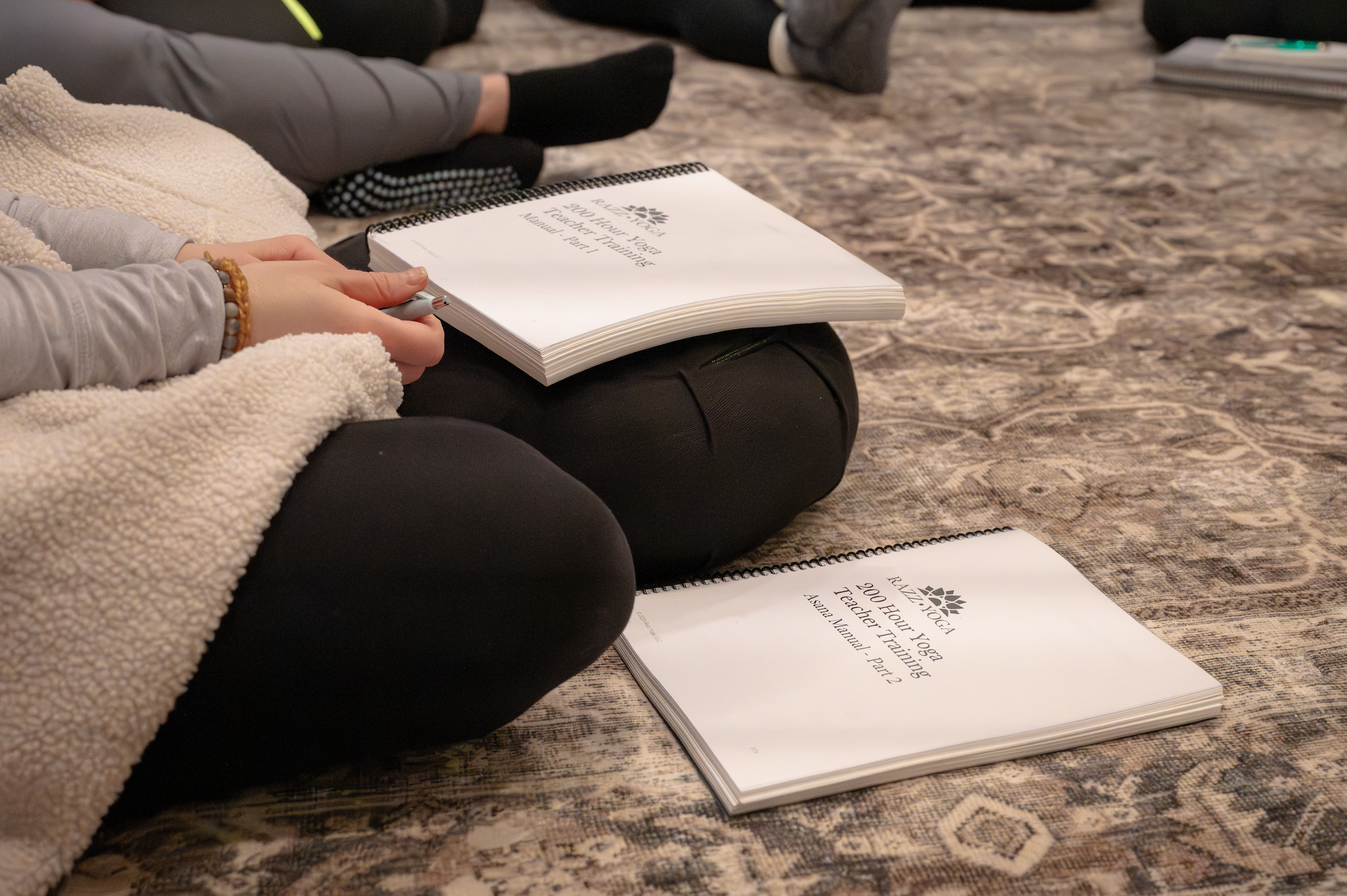
Razz Yoga's 2027 200 HR Yoga Teacher Training begins in January, offering an opportunity to deepen your practice, explore yoga beyond the physical postures, and learn in a supportive community. Whether you're considering teaching someday or feel called to understand the practice more deeply, you don't need to have every answer before you begin.
Sometimes, the first step isn't about knowing exactly where you're going. It's about being open to discovering what's possible.